
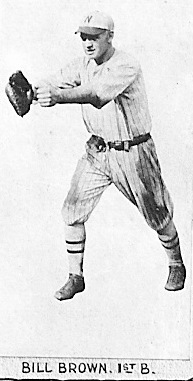
During the early twentieth century, Buster Brown was a comic strip character and mascot associated with boys’ clothing and shoes. William “Buster” Brown, the baseball player, was anything but cute. He was a minor-league power hitter of the early 1920s — “the Babe Ruth of Sunland” — when home runs first changed the game. “Buster Brown is among the few ball players that still uses the methods and scrappiness of the old timers,” wrote one contemporary sportswriter. “He is in there battling all the time, and is willing to swap punches with the hardest for the merest reason.” Despite his popularity with the writers and the fans, he had a rough and combative personality, and his life after baseball revolved around roadhouses and gamblers in southwest St. Louis during Prohibition in the 1920s.[1]
William Brown was born in Philadelphia on January 4, 1894,[2] and attended school until the third grade. His childhood and teenage years are a mystery. As a young man, he served as an Army private with the 16th Company at Jefferson Barracks Military Post south of St. Louis. He played first base for the post’s baseball team that included former semi-pro and major-league players, among them catcher and captain Grover Land.[3]
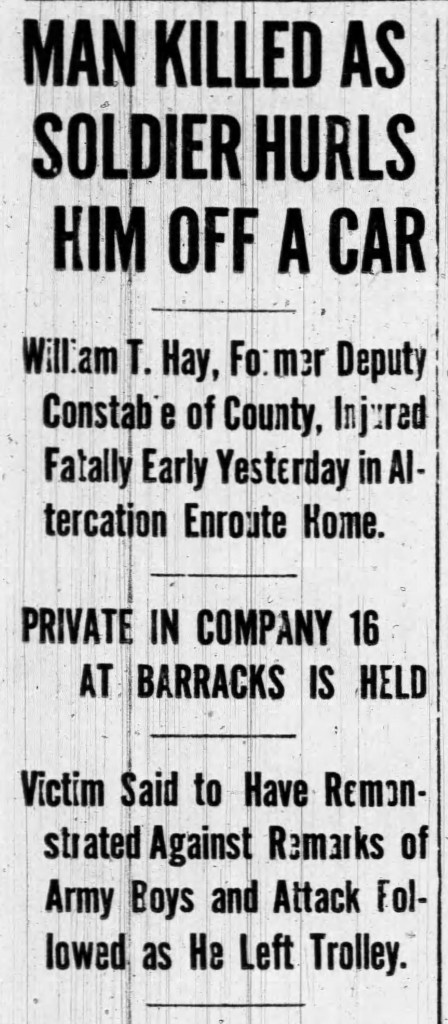
A foreshadowing of Brown’s violent nature occurred during his military service. Following a night at the local dance halls, he reportedly shoved William T. Hay off a moving streetcar during the early morning hours of Thanksgiving Day 1916. Hay died that afternoon after suffering a fractured skull from the fall. A bystander confronted Brown and asked for his name and company. “None of your business,” replied Brown, and punched him in the eye. Brown was taken into custody and spent two weeks in jail. An investigation determined that Hay, a former deputy constable known for harassing new recruits to Jefferson Barracks, had been the aggressor. Hay brandished a gun and tried to pull Brown from the car, but Brown pushed him off in self defense. [4]
In the spring of 1919, Bill Brown tried out for the St. Louis Cardinals and signed a contract with them in February 1920.[5] The Cardinals sent him to Mobile, Alabama, where he began his professional career in the Class A Southern Association that April. He batted .230 in 96 games and led the Bears with six home runs. There he gained a reputation “as a slugger of no mean ability,” according to the Atlanta Constitution. Following a brief stint with the Joplin Miners of the Western League, the Nashville Vols purchased his contract and brought him back to the Southern Association in May 1920. Nashville fans remembered him as “Big Boy” Brown. Playing for Mobile in the first game of a doubleheader at the local ballpark, Sulphur Dell, he hit a game-winning home run “somewhere over past Fifth avenue” in the twelfth inning against the Vols on June 7, 1919.[6]
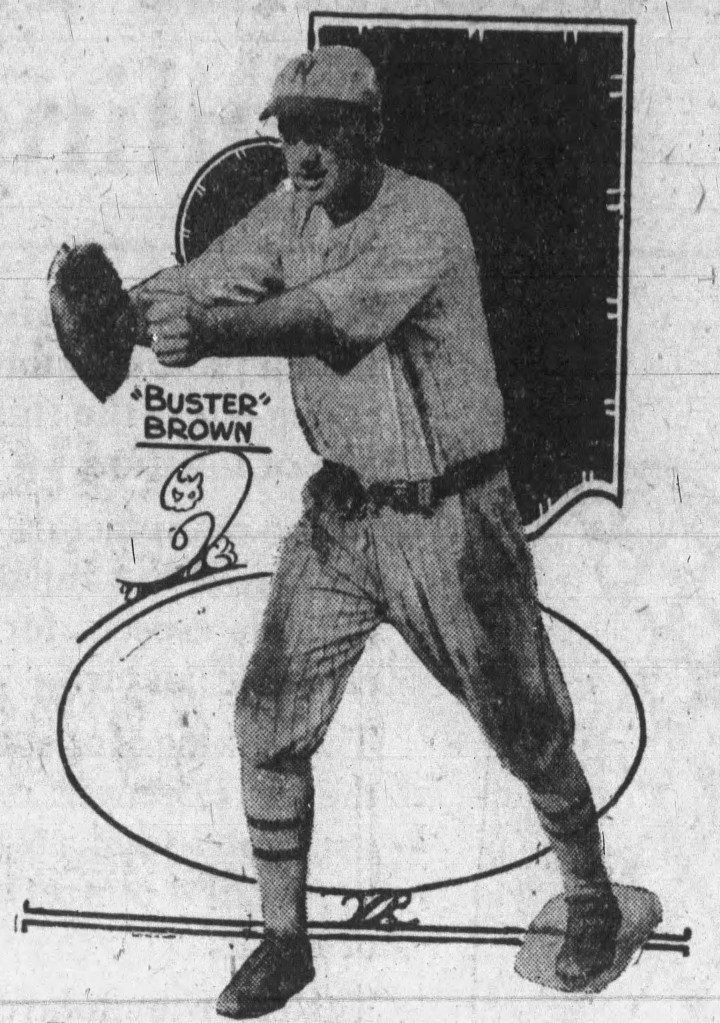
Nashville was where Brown experienced the most success of his short minor-league career. The team needed a first baseman. He adequately filled that position in 1920, but his hitting was mediocre at .239 in 114 games. Despite hitting only five home runs, those powerful blasts, along with the ones that almost cleared the fence, left a lasting impression. “William Brown fired a blow so far over the right-field wall that searching parties are still on the hunt,” marveled Blinkey Horn of the Nashville Tennessean. Fans offered to search for the ball in the lake at Centennial Park. Horn added: “Battering Bill Brown…injected so much fizz into the old baseball that it hurtled forty feet over the palisade top, whizzed across Fifth avenue and all other avenues between there and the penitentiary.” His home runs were the highlight of an otherwise disappointing seventh-place finish to the season. [7]
Horn waxed lyrical about Brown’s exceptional hitting prowess in 1920:
“Oh, he ain’t no beaut prize grabber,
And his map looks like a pug,
But when he sees a hostile slabber,
Great gosh how he can slug!”[8]
Needing left-handed pitching, Nashville manager Hub Perdue tried using Brown as a reliever. His pitches had speed, but he struggled to put them in the strike zone. This did not discourage his inflated ego regarding his pitching ability. Prior to a post-season exhibition featuring “Buster Brown’s World Famous All-Stars” at Sulphur Dell, Brown confidently told the local newspapers that he had the perfect pitcher to start the game. “He will uncover a curve ball that is unhittable, and whose control is perfect,” he boasted. “Nashville fans probably have never witnessed a better pitcher in action than my choice for this game. Truly a treat is in store. My team will probably be the favorite on account of the pitcher that I expect to use. My choice for mound duty is a man that has about everything a pitcher should have. I will pitch the game myself.”[9] The experiment carried over into the 1921 season with mixed results. In 57 innings pitched, he struck out 11 but walked 45 batters for a 6.79 earned-run average. After a relief appearance that resulted in 10 walks, three hit batsmen, and a balk, the Nashville Tennessean quipped: “As a pitcher[,] Brown is a marvelous first baseman.” [10]
In a start at Sulphur Dell against the Memphis Chicks on April 21, 1921, Brown hit left fielder Rinaldo “Rhino” Williams with a pitch. Williams angrily threw his bat towards the mound and then went to first base. Brown stopped him halfway along the baseline and grabbed him in a flying headlock. Both benches rushed onto the field to break up the fight. Buster broke free from the pile and struck Williams in the face. Memphis catcher Bernard Hungling attempted to intervene, but was met with a powerful punch to the ear from Brown that echoed across the ballpark. Both Brown and Williams were ejected and fined $10 each for the altercation. Brown received cheers from the fans as he exited the dugout and headed to the clubhouse. “The fans enjoyed the fight far more than they did the ball game yesterday,” reported the Nashville Banner.[11]
Brown was a tough guy who wasn’t afraid to throw punches. He was the type of brawler “who would fight at the drop of a hat and drop it himself.” It is alleged that he carried a five-inch switchblade knife, even while playing. He had been a boxer while in the military and thought he was better than heavyweight champion Jack Dempsey. He once boasted, “I wish someone would lock Dempsey and me in a room, place $1,000 on the floor by the door, and declare, ‘Whoever exits first can take the money.’ I bet I’d come out first.” Buster attempted to challenge utility player John “Jack” Steele, reportedly the enforcer on manager Kid Elberfield’s Little Rock club. Brown didn’t know that the league had suspended Steele for a fight at Chattanooga. Buster went up to the Travelers’ dugout and inquired about Steele’s whereabouts. When nobody answered, he then asked, “Is there any so and so in there who wants to fight?” No player took him up on the offer.[12]
Brown’s meanness extended to both his opponents and his teammates. His animosity for third baseman Bill Herman, later a teammate with Hopkinsville in the Kitty League, led him to throw curveballs at him from first base, both in practice and actual games. Despite his fondness for Hopkinsville shortstop Joe Longnecker, he derived satisfaction from throwing the ball so hard that it caused his friend’s face to turn red with pain when he caught it.[13]
Brown also had a twisted sense of humor. He used to sandwich raw hamburger meat between two porcelain saucers and take bites from it. He would also take a bite out of a glass or even the top of a soft drink bottle after drinking from it. The sight of blood coming from his mouth naturally shocked and sickened onlookers. This reaction made him laugh heartily.[14]
Brown’s wife was with him in Nashville in 1920. Local sportswriter Ralph McGill remembered her as having a gold tooth and wearing a man’s cap. Her cheeks were adorned with an abundance of rouge. She would often be found in the box seats at Sulphur Dell, sitting with the other players’ wives down the first base line. Buster once gestured to her in the stands when an umpire made an objectionable strike call. “If it wasn’t for that little lady sittin’ over there,” Brown told him, “I would bust you one.”[15]
Having lost his position at first base to former major-leaguer Hugh Bradley and being unsuccessful as a pitcher, Nashville placed Brown on waivers during the second week of May 1921. No team claimed him, so the Vols loaned him to the Chattanooga Lookouts in the same league. In nine games for Chattanooga, Brown hit .333 with three doubles and one home run while playing first base and right field. Bradley’s indefinite suspension for “breaking training rules” (public intoxication) led the Vols to bring him back to Nashville.[16]
Despite his power hitting skills, the Vols management used Brown’s suspect defensive play as a reason to replace him throughout his three seasons with the club. But he didn’t allow the criticism get to him and his batting performance always spoke for itself. Blinkey Horn of the Tennessean playfully attributed these grievances to pitchers around the league and the expense of baseballs being knocked out of the park. [17]
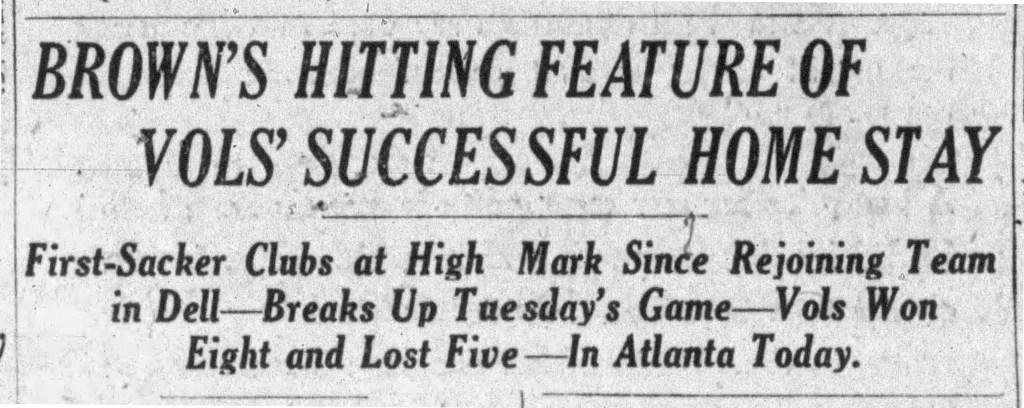
Brown took over at first base on May 24. Though his legs got in the way much of the time, it was his bat rather than his defense that fans came to see. He was already called “Buster” before he got to town. But it was during the 1921 season that he truly earned the moniker. He amazed fans with his home runs, some of the longest ones ever seen at Sulphur Dell. His tool of choice was “a lean and wicked looking bat.” “No player in the league can hit a ball harder than Brown when he wants to,” wrote the Nashville Banner, “and his ability to swing from either side of the plate makes him dangerous to right and left-handed pitchers alike.” Fans once showed their appreciation by throwing $65 in coins onto the field for his benefit. [18] On June 4, he slugged a pitch off Atlanta Crackers reliever John Suggs that cleared the Beaudry Ford Motor Company sign in right field, one of the longest home runs ever hit at Ponce de Leon Park. “It takes a lot of muscular effort to propel a baseball that far,” lauded Atlanta sportswriter Morgan Blake.[19]
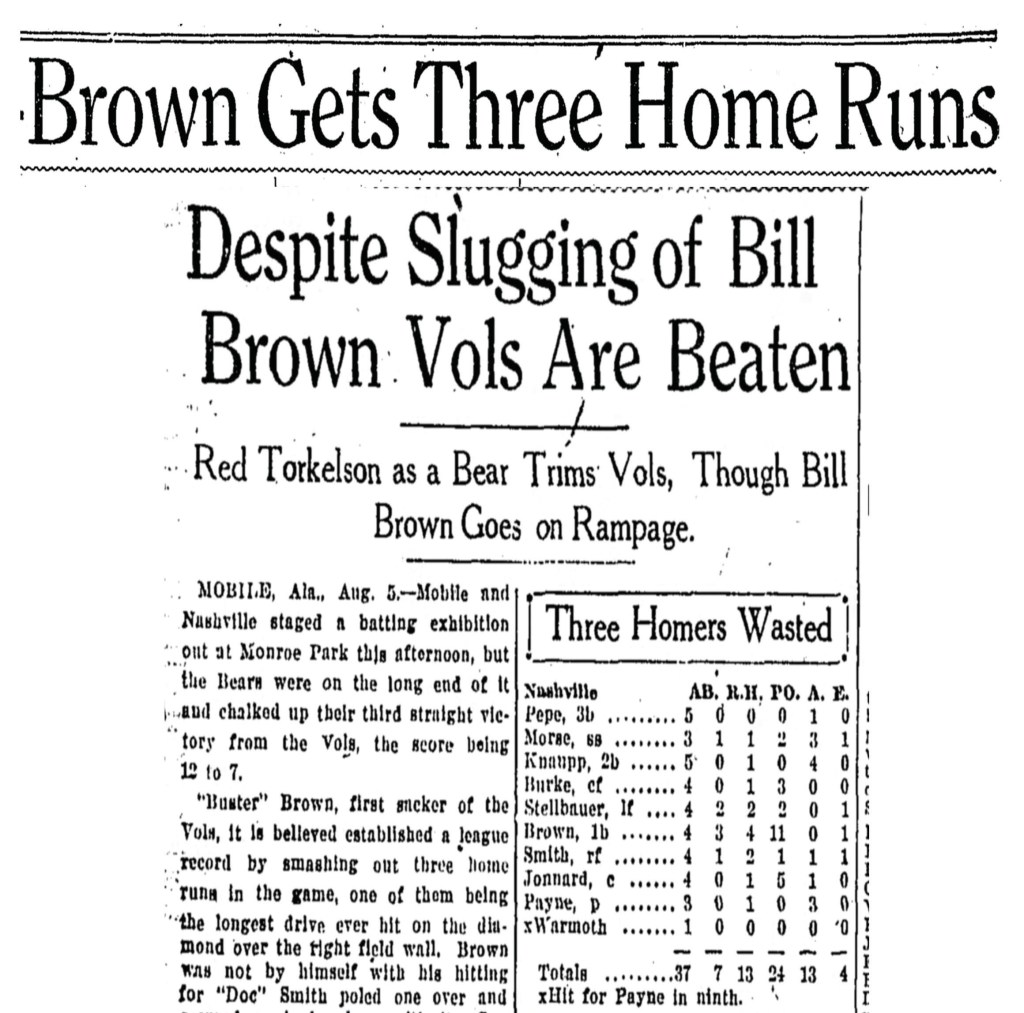
On August 5, 1921, Buster etched his name in the Southern Association record books by hitting three home runs in a game at Mobile. All of them were hit off Chester “Red” Torkelson, a veteran right-handed spitball pitcher who had a short stint with the Cleveland Indians in 1917. Torkelson was making his debut with the Bears that day. Brown drove in five runs, but his outstanding performance wasn’t enough to lead Nashville to victory, as they lost the game, 12-7. [20]
Buster finished the season with 14 home runs, including one hit while with Chattanooga. Only eight batters in the Southern Association had double-digit homers. He also boasted a .314 average in 129 games, one of only two Nashville players to finish above .300. Jim Sloan, the president of the ballclub, had offered to pay for Brown and his wife’s train fare back home to St. Louis if he exceeded the mark. “Get your check ready,” Buster told him.[21]
For the second straight winter, Brown held out for a larger salary, but management refused to negotiate. It wasn’t until spring training was practically over in April 1922 that he arrived in Nashville and signed a contract for the amount they had originally offered him. However, by that time, Ray Werre had already earned the first base job because he was a better fielder at the position. The Vols suspended Brown shortly thereafter when he went home to St. Louis following the death of his mother-in-law. When he returned, he found himself on the bench and used as a pinch-hitter. Only the suspension of Herrick Emery enabled Buster to return to the starting lineup, taking Emery’s spot in left field. Fortunately for his limited defensive skills, it was the shortest field at Sulphur Dell, noted a local sportswriter, and “there is a scoreboard and a high board fence to help him stop ground balls.” He batted .214 in seven games and limited play.[22]
Unable to use him, Nashville sent Brown to the Rockford Rox in the Class B Three-I League. A few days before his assignment, Brown and Vols team captain William “Chick” Knaupp faced assault and battery charges after defending an elderly night watchman at the Tulane Hotel in Nashville. The watchman tried removing a disruptive patron from the hotel when the man knocked him down in the lobby. Several ballplayers witnessed the incident; Knaupp came to the watchman’s defense, then Brown chased after the culprit, who fled down Church Street before Buster caught up to him and pummeled him. [23]
Brown’s exile to Rockford lasted five games before the club returned him to Nashville, despite a .368 batting average and seven hits in 19 at-bats. It was expected that the Vols would have to let him go because other clubs showed no interest. Instead, they sent him to Hopkinsville, Kentucky, where he made his debut in the Kentucky-Illinois-Tennessee (Kitty) League on May 16, 1922. It was Class D ball, the lowest level of minor-league baseball. It came as no surprise that Brown, after being exposed to higher competition, thrived in the league. New York Yankees scout Joe Kelly considered him “one of the best first basemen I’ve seen outside the majors.” Buster batted .345 in 111 games for Hopkinsville, leading the circuit with 19 home runs, and managed the club by the end of the season. [24]
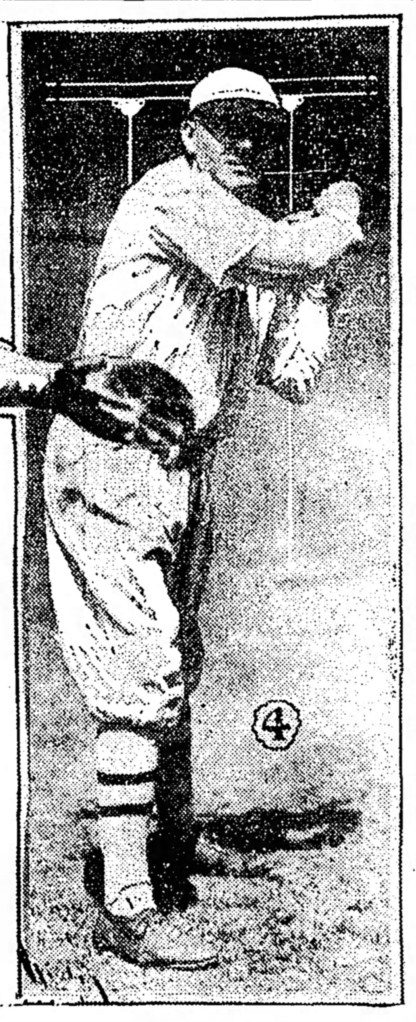
One memorable incident occurred during Brown’s tenure in the Kitty League. During a game in Paris, Tennessee, on May 27, 1922, he connected with a ball that seemed fair. Brown’s heated protest after umpire Ray Earle ruled the ball foul led to his ejection from the game. One story claims he confronted the umpire after the game, taking his chewed tobacco and smearing it into Earle’s eyes. In agony, the umpire cried out for water, and Brown obliged by pouring a bucket on his head. Brown allegedly received a charge of breaching the peace in the Paris city court and a fine of $20. Art Wilson, the manager of Hopkinsville and a former major-leaguer, had to cover the fine since Brown couldn’t afford it. Brown was informed that because only part of Barton Field was in the city limits, he would also have to go to the Henry County Court upstairs in the courthouse. Once again, Wilson had to pay the $20 fine. Buster told his manager, “Fined on the first floor, fined on the second floor. Boss, ain’t you glad this building didn’t have 20 stories?”[25]
Once the Kitty League closed, Brown returned to Nashville in the first week of September. The Vols were languishing in seventh place in the Southern Association and gave him more playing time than they did in the spring. During the last seven contests, he hit .429 and closed his three-year career in Nashville fittingly with a home run in the last game of the 1922 season.[26]
The Vols traded Brown to the Columbia Comers of the Class B South Atlantic League in exchange for utility player Olin Perritt on February 12, 1923. Unlike the previous season, he reported for spring training early—in fact, he was the first player to appear—intending to shed some weight accumulated over the winter. But the power-hitting that was his trademark diminished and the 29-year-old veteran managed only two home runs, 19 extra-base hits, and 28 RBIs in 56 games. Coupled with less speed and his usual fielding struggles at first base, the Comers released him on June 10. “Brownie is not through as a ball player,” opined the Columbia Record, “and a change of environments may help him to hit his stride.” [27]
Brown signed with the Hattiesburg (Mississippi) Hubmen in the Cotton States League on June 21. The competition was described as “much faster than Class ‘D’” and “just a step [d]own from Southern League time.” Reportedly, he was going to manage the Hattiesburg club, but they released him to the Clarksdale Cubs in the same circuit on July 10. Overall, he batted .290 in 29 games for both teams before the league disbanded on the 24th.[28] When this happened, many players migrated north to finish the season in the Kitty League. Buster played for the Milan-Trenton (Tennessee) Twins and hit .268 with five doubles and one home run in 17 games.[29]
It is uncertain if Brown continued his minor-league career after 1923. It’s possible that his aggressive and confrontational personality prevented him from playing elsewhere. He made plans in February 1927 to join a semi-pro team in the Copper League for spring training in Arizona.[30] During the off-season, Brown worked as a server at a saloon and dance hall on 9201 South Broadway in southwest St. Louis. He was divorced by this time and lived at the saloon. Prohibition was at its height when manufacturing and selling alcoholic beverages was illegal. The business had a reputation among law enforcement as being a speakeasy; officers raided it about this time and found almost 800 bottles of “home brew” as well as beer mash and moonshine whiskey. Two years earlier, a drunken brawl outside the saloon resulted in the killing of an off-duty police officer.[31]
“Curley” Brown, as he was now known, associated with hoodlums, criminals, and gangsters. One of these men was Howard W. Blair, an unemployed shipping clerk formerly with the Haas-Lieber Grocery Company in St. Louis. Another was John Vollman, who worked as a bartender and chauffer for Edward J. “Jellyroll” Hogan, leader of one of the city’s most notorious crime families during this period. Vollman had been charged with the murder of off-duty patrolman Rudolph Hartung in 1925, but a hung jury prevented his conviction.[32]
Brown needed money for the trip to spring training. He claimed Blair devised a plan to steal from participants at a craps game taking place at the Continental Portland Cement Company facility three miles south of St. Louis. Brown would join the game, figure out the players with the highest amount of money, and Blair would then carry out the theft. Brown was initially hesitant of the scheme, but Blair gave him reassurance that the shady players wouldn’t report them to the authorities.[33]
The three men were driven in a taxi to the cement facility around 3:15 on the morning of February 7, 1927. A short distance away, at the Gravois Creek bridge, Brown admittedly “lost his nerve” about going through with the robbery. He told the driver to stop and turn back. In his attempt to turn around, the driver backed the vehicle into a telephone pole. The pole hit the top of the cab, breaking the rear window, and the car got stuck in a ditch. Brown, Blair, and Vollman went behind and pushed it out. Blair then confronted Brown, pointing a pistol at him, and labeled him a coward for wavering on the robbery plan. Brown lunged for the firearm, and they both fell down the slope towards Gravois Creek. After shooting Blair multiple times, Brown climbed back up the embankment and instructed the driver to leave. He took out the gun and as the taxi drove, he tossed six empty shells out the front passenger window, one at a time. “There’s another guy gone,” Brown told the driver. “You keep still or you’ll get the same dose.” [34]
Howard Blair’s body was found near the bridge in Gravois Creek a few hours later. One bullet had struck him in the temple and five others hit his chest and abdomen. Investigators also found a piece of the taxi’s broken window glass nearby. This crucial evidence led to the questioning of the driver and the subsequent arrests of Brown and Vollman less than twenty-four hours after Blair’s death.[35]
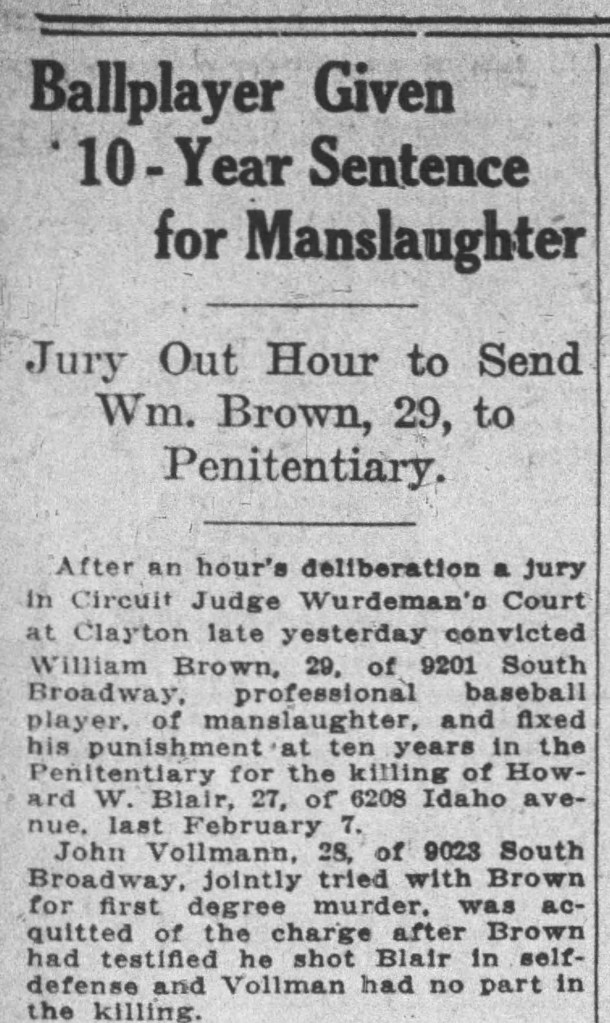
Both men faced trial for murder in the St. Louis County Circuit Court on May 3 and 4, 1927, with the State of Missouri seeking the death penalty. Brown cleared Vollman of any involvement and confessed to shooting and killing Blair, justifying it as self-defense. The St. Louis Post-Dispatch believed that Brown accepted responsibility to protect Vollman from testifying, as Vollman had already been on trial two years earlier for the murder of Rudolph Hartung. The jury deliberated for an hour before reaching a verdict of manslaughter and a 10-year prison sentence for Brown in the murder of Howard Blair.[36]
On May 12, Brown was incarcerated at the Missouri State Penitentiary in Jefferson City. He often wrote letters to his former ballclub in Nashville, asking for discarded baseballs to use in prison games. He sought parole from the State Penal Board in October 1928. Based on the board’s recommendation, Governor Henry S. Caulfield granted him parole. He was released on July 8, 1929, after serving only two years, one month, and 26 days of his 10-year sentence.[37]
Brown stayed out of trouble, or at the very least, avoided making headlines, once he finished serving his prison sentence. [38] A World War II draft registration card for William Brown gave his address at 9526 South Broadway in Lemay, Missouri, a part of southwest St. Louis County where he frequented.[39] He stated that his place of employment was at 319A Missouri Avenue, which was across the Mississippi River in East St. Louis, Illinois. Brown called it a “recreation center,” but it was actually the “Ringside,” a hotbed for illegal gambling on both sides of the river. The casino offered seven dice tables, slot machines, a roulette wheel, a blackjack game, and indoor air conditioning. The local law enforcement, who either feigned ignorance or cited a shortage of officers because of the war, disregarded the illicit activities. A grand jury investigation deemed it the “largest gambling house in the Middle West.” [40]
What became of Buster Brown after April 1942 is shrouded in mystery. Shelby Peace, president of the Kitty League, shared rumors that Brown had made his way to Chicago. He got caught up in the gang violence occurring there, and his body, riddled with bullets, was discovered near East St. Louis. However, a search of online newspapers did not reveal any record of such a gruesome crime occurring in that area. A death certificate for William Brown matching the birth date on the World War II Draft Registration Card shows William Brown died at a veteran’s hospital in Philadelphia on February 12, 1957, at 63 years old. [41]
Sportswriters like Ralph McGill and Fred Russell fondly recalled William “Buster” Brown when reminiscing about tough baseball players of bygone days. McGill considered him “the greatest natural hitter I ever saw.” The editor and Pulitzer Prize-winning journalist mentioned him often in his columns while writing for the Atlanta Constitution in the early to mid-twentieth century. A Nashville fan nostalgically remembered coming to Sulphur Dell since the days that Buster Brown played when the ballpark closed in 1963. Raymond Johnson of the Nashville Tennessean recalled in 1960: “Buster Brown, a bull-necked first baseman of 40 years ago, is one of those rowdy players hard to forget. He could hit a ball as far as any man in those days of the dead ball. He was a gifted player who radiated with color. But he was a cruel man, mean at heart, and a boozer.” William “Buster” Brown, with all his flaws, stood out as a distinctive but forgotten personality in Southern minor-league baseball history. [42]
Sources Cited
Books
Lloyd Johnson and Miles Wolff, Encyclopedia of Minor League Baseball. Third edition. Durham NC: Baseball America, 2007.
Fred Russell, Bury Me in an Old Press Box: Good Times and Life of a Sportswriter. New York: A.S. Barnes and Company, 1957.
Marshall D. Wright, The Southern Association in Baseball 1885-1961. Jefferson City NC: McFarland & Company, Inc., 2002.
Newspapers
Atlanta Constitution
Atlanta Journal
(Hopkinsville) Kentucky New Era
(Little Rock) Arkansas Democrat
Memphis Commercial-Appeal
Nashville Banner
Nashville Tennessean
St. Louis Globe-Democrat
St. Louis Post-Dispatch
St. Louis Star and Times
St. Louis Times
Websites
Ancestry.com
Familysearch.org
Missouri Digital Heritage https://www.sos.mo.gov/mdh/
Missouri Penitentiary Database
https://www.sos.mo.gov/Images/Archives/MSP/RG213_NR_MM_0138.pdf
The Sporting News Player Contract Cards https://digital.la84.org/digital/collection/p17103coll3/id/19488/rec/2
[1] “Joe Kelly Thinks Brown One of Best First Basemen Outside of Majors,” Nashville Tennessean, 31 July 1922, 6.
[2] William Brown World War II Draft Registration, Familysearch.org. Brown’s age is listed as 29 years old in William Brown register, Missouri State Penitentiary Database. https://s1.sos.mo.gov/records/archives/archivesdb/msp/Detail.aspx?id=52381 and https://www.sos.mo.gov/Images/Archives/MSP/RG213_NR_MM_0138.pdf. Accessed 19 December 2023. William “Buster” Brown card, The Sporting News Player Contract Cards collection. https://digital.la84.org/digital/collection/p17103coll3/id/19488/rec/22
[3] William Brown World War II Draft Registration. Familysearch.org. “Jefferson Barracks Team to Oppose Camp Funston Today,” St. Louis Globe-Democrat, 14 September 1918, 6.
[4] “Man Killed As Soldier Hurls Him Off A Car,” St. Louis Globe-Democrat, 1 December 1916, 1. “Man’s Death at Hands of Soldiers Due to Old Grudge,” St. Louis Post-Dispatch, 1 December 1916, 4. “Soldier Freed At Inquest Over Former Deputy,” Ibid, 3 December 1916, 19. “Private Held in Killing of Man, Is To Be Released,” Ibid, 16 December 1916, 3.
[5] Brown may have been scouted by Charley Barrett, who helped Branch Rickey develop the modern farm system for the St. Louis Cardinals. Barrett had recommended Brown to the Mobile Bears. When Brown later made good with the Nashville Vols, Barrett told the Nashville Tennessean: “You have two players on your club [Brown and Edd Bogart] that we once had. I’m mighty glad they are both making such good men for Hub [Perdue]’s club.” “Four Bear Players Out of Harness,” Nashville Banner, 6 April 1919, 8. “Burlesque Baseball Injustice to Fan Flock,” Nashville Tennessean, 8 June 1921, 10.
[6] J.L. Ray, “Bears Take Double Bill,” Nashville Banner, 8 June 1919, 9. Marshall D. Wright, The Southern Association In Baseball 1885-1961. Jefferson NC: McFarland & Company, 2002, 199. “The fellow we are talking about is named Brown,” wrote Charles McLean of the Nashville Tennessean when Brown hit the home run against Nashville. “Not Buster, but still about as frolicsome as that lad.” McLean, “Vols Get Seven Hits In 19 Innings While Bears Get 21 – Bears Win Both,” Nashville Tennessean, 8 June 1919, 52.
[7] “Brown’s Homer in 10th Tops Wild Rally as Vols Win,” Nashville Tennessean, 29 June 1920, 8.
[8] Blinkey Horn, “Brown’s Homer In 10th Tops Wild Rally As Vols Win,” Nashville Tennessean, 29 June 1920, 8.
[9] “Buster Brown & Co. Will Play in Dell,” Nashville Tennessean, 1 October 1920, 10. “Perdue May Be Pinch Hitter For Browns,” Ibid, 2 October 1920, 10. The All-Stars edged out the W.O.W. club from Franklin, Kentucky, 6-5. Contrary to his boasting, Brown did not pitch in the game. “Buster Brown’s All-Star Team Trims Franklin, Ky.,” Ibid, 3 October 1920, 13.
[10] “Vols Pound Marks for 17 Hits, But Lose, 14-6,” Nashville Tennessean, 27 July 1921, 8. Wright, Southern Association, 214.
[11] “Memphis Takes Entire Series From Hub’s Vols,” Nashville Tennessean, 22 April 1921, 12. “Chicks Win Prize Farce of the Season from the Vols,” Nashville Banner, 22 April 1921, 18. “Chicks Capture Third Tilt from the Vols,” Memphis Commercial-Appeal, 22 April 1921, 13.
[12] Guy Butler, “Jack Steele Was Hard Guy But He Met His Waterloo,” Atlanta Journal, 31 May 1933, 10. Joe Dorris, “Fire and Fall Back,” (Hopkinsville) Kentucky New Era, 8 June 1951. Sportswriter Blinkey Horn referred to Brown as “the Jack Dempsey of Dixie.” “Vols Play In Dell Sunday With Cole,” Nashville Tennessean, 14 September 1922, 10. Brown’s challenge to Jack Steele and the Little Rock players may have taken place on May 20, 1922. The Travelers started a series against the Vols at Sulphur Dell that day after coming from Chattanooga. Steele and Lookouts pitcher Ed Morris got into a fight in the clubhouse after the April 17 game. The Southern Association suspended Steele and shortstop Fred Wingfield, who were the players fighting on the field. On April 29, Little Rock released Steele to Fort Smith in the Western Association. “Travelers Win Opening Game From Chattanooga Lookouts; Players’ Fighting Features,” (Little Rock) Arkansas Democrat, 18 April 1922, 7. “Dickerman and Connolly Put Travelers Through to Second Victory Over Nicklin’s Team,” Ibid, 19 April 1922, 11. “Travelers Off On Lengthy Road Trip,” Ibid, 30 April 1922, 8.
[13] Joe Dorris, “Fire and Fall Back,” (Hopkinsville) Kentucky New Era, 8 June 1951.
[14] “Here’s a Ball Player Tough as B. Brown,” Nashville Banner, 18 July 1922, 10. “A Bigger and Better Season,” Ibid, 13 January 1928, 13.
[15] Fred Russell, Bury Me In An Old Press Box. New York: A.S. Barnes and Company, 1957, 102-103. The identity of Brown’s wife has not yet been determined.
[16] “Vols Are Rained Out and Hit Foreign Trail for Week’s Stay,” Nashville Tennessean, 11 May 1921, 10. “Bill Brown Sent to Lookouts,” Ibid, 13 May 1921, 11. Nashville sent shortstop Henry “Buck” Blakey to Chattanooga as compensation for returning Brown. “Chief Wade Will Open Series With Pelicans,” Ibid, 25 May 1921, 10.
[17] “Homers by Stellbauer and Brown Beats Atlanta,” Nashville Tennessean, 18 July 1921, 5.
[18] “Today Is the Birthday of the Gallatin Squash,” Nashville Tennessean, 7 June 1921, 8.
[19] “Four Class A Players Still Out,” Birmingham Age-Herald, 22 March 1922, 7. “Vols Even Series By Taking Final Game From Frankmen,” Nashville Banner, 5 June 1921, 13. Morgan Blake, “Volunteers Demolish Crackers,” Atlanta Journal, 5 June 1921, 17.
[20] “Brown’s Hitting Feature of Vols’ Successful Home Stay,” Nashville Banner, 1 June 1921, 10. “Despite Slugging of Bill Brown, Vols Are Beaten,” Nashville Tennessean, 6 August 1921, 8.
[21] Wright, Southern Association, 211-216. “Bogart, Brown and Stellbauer Swing Big Bats in Dixie,” Nashville Banner, 11 June 1921, 10.
[22] “High Fence in Dell Has No Terrors for Bill Brown,” Nashville Tennessean, 10 April 1922, 8. Ibid, 19 March 1922, 14. “Willyum Brown Reports at Last,” Nashville Tennessean, 9 April 1922, 9. “Brown Will Replace Suspended Emery,” Ibid, 28 April 1922, 11.
[23] “Willyum Brown No Longer Vol; Goes to Rockford in Three Eye,” Nashville Tennessean, 30 April 1922, 13. “Bill Brown Sold to Rockford, Ill.,” Nashville Banner, 30 April 1922, 13. “Two Ball Players Arrested In Fight,” Nashville Tennessean, 24 April 1922, 12.
[24] “All Games in Which Jonnard Plays Will Be Protested, Sloan Says,” Nashville Tennessean, 11 May 1922, 12. “Joe Kelly Thinks Brown One of Best First Baseman Outside of Majors,” Ibid, 31 July 1922, 6.
[25] Joe Dorris, “Fire and Fall Back,” (Hopkinsville) Kentucky New Era, 8 June 1951. Dorris was told this story by Shelby Peace, president of the Kitty League. There is no mention of this incident in the Paris (TN) Parisian newspaper and no records of the $20 fines were found in Paris or Henry County court records.
[26] Nashville Tennessean, 14 September 1922, 10.
[27] “Bill Brown Traded,” Nashville Banner, 12 February 1923, 8. “Promotion Comes For Olin Perritt,” Charleston (SC) State, 13 February 1923, 2.
[28] “Cotton States Season Closes Saturday Financial Trouble,” Jackson (MS) Clarion-Ledger, 19 July 1923, 2. “Torkelson Is Given the Gate at Hattiesburg,” Shreveport (LA) Journal, 12 July 1923, 8. Jackson (MS) Clarion-Ledger, 23 June 1923, 6.
[29] 1923 Kitty League reconstructed statistics by Kevin D. McCann.
[30] The Copper League, a four-team semi-pro circuit, fielded teams in Bisbee, Arizona; El Paso, Texas; Fort Bayard, New Mexico; and Hurley, New Mexico, during the 1927 season. Since Bisbee was the only Arizona club, it is likely they invited Brown for spring training.
[31] “Slayer of Policeman Held Without Bond,” St. Louis Globe-Democrat, 15 May 1925, 17.
[32] “Two Alleged Slayers of Howard Blair on Trial,” St. Louis Post-Dispatch, 3 May 1927, 26. Howard Wilson Blair death certificate. Missouri Death Certificates, 1910-1972. Missouri Digital Heritage website. https://www.sos.mo.gov/images/archives/deathcerts/1927/1927_00006175.PDF. Accessed 19 December 2023.
[33] “Ballplayer Given 10-Year Sentence for Manslaughter,” St. Louis Globe-Democrat, 5 May 1927, 9.
[34] “Glass From Auto Clew [sic] To Arrests In County Murder,” St. Louis Times, 8 February 1927, 18. “Two Held in County Slaying After Driver of Death Car Confesses,” St. Louis Globe-Democrat, 8 February 1927, 2. Brown contradicted the driver’s version and stated under oath that he tossed the gun out of the window and into the River des Peres. “Ballplayer Given 10-Year Sentence for Manslaughter,” St. Louis Globe-Democrat, 5 May 1927, 9.
[35] “Body of Man Shot to Death Is Found In Gravois Creek; Partly Identified,” St. Louis Post-Dispatch, 7 February 1927, 2. The investigative skills of St. Louis police officer Thomas Wren that resulted in Brown’s arrest and conviction was recounted 15 years later. “Law Enforcement Is Nothing New For Hard-Hitting Captain Wren,” St. Louis Globe-Democrat, 9 March 1942, 5. A photo of how the broken pieces of the rear window glass fit together appears in “Broken Auto Glass Is Murder Clew [sic],” St. Louis Post-Dispatch, 9 February 1927, 2.
[36] “Ballplayer Given 10-Year Sentence for Manslaughter,” St. Louis Globe-Democrat, 5 May 1927, 9. “10 Years For Murder Satisfies Baseball Player,” St. Louis Post-Dispatch, 5 May 1927, 13.
[37] William Brown register, Missouri State Penitentiary Database. Missouri Digital Archives. https://s1.sos.mo.gov/records/archives/archivesdb/msp/Detail.aspx?id=52381 and https://www.sos.mo.gov/Images/Archives/MSP/RG213_NR_MM_0138.pdf. Accessed 19 December 2023. Ralph McGill, “R.J. Spiller Speaks Fondly of His Boys,” Atlanta Constitution, 22 April 1929, 9. “Five St. Louis Convicts on Docket for Parole,” St. Louis Globe-Democrat, 26 September 1928, 20. “Convict, 70, Paroled; In Prison 18 Years,” St. Louis Post-Dispatch, 6 July 1929, 10. “St. Louisan, 80, To Be Paroled After 18 Years In Prison,” St. Louis Star and Times, 6 July 1929, 1.
[38] “Sideline Sidelights,” Nashville Banner, 21 February 1930, 18. According to Clarence “Bubber” Jonnard, who played with Brown on the Nashville Vols, Brown was in St. Louis almost a year after his release from prison. Jonnard told sportswriter Freddie Russell that Brown “was sentenced to the pen for being mixed up in a murder.” Ibid.
[39] Louis Strong and his wife, Nora (Pugh) Strong, rented the adjoining apartment at 9526 A South Broadway. Strong had been an Army lieutenant at Jefferson Barracks during Brown’s military service and was an athletic director when Brown played baseball for the post team. The woman identified in Brown’s prison register as his “sister,” Nora Armstrong, is thought to be Louis Strong’s spouse instead. She was not related to him by blood. The address provided for her in the prison register is 127 East Hancock Street in St. Louis County. No link has been found between Nora Strong and this address thus far. William Brown register, Missouri State Penitentiary Database. Missouri Digital Archives. https://s1.sos.mo.gov/records/archives/archivesdb/msp/Detail.aspx?id=52381 and https://www.sos.mo.gov/Images/Archives/MSP/RG213_NR_MM_0138.pdf. Accessed 19 December 2023.
[40] “Jury Demands Cleanup of East Side Gambling,” St. Louis Globe-Democrat, 27 May 1942, 1.
[41] Joe Dorris, “Fire and Fall Back,” (Hopkinsville) Kentucky New Era, 8 June 1951. William Brown Pennsylvania death certificate, Ancestry.com. William Brown World War II Draft Registration Card, Familysearch.org.
[42] Fred Russell, “Sidelines,” Nashville Banner, 13 January 1955, 36. Ralph McGill, “The Sad Story of Buster Brown,” Atlanta Constitution, 21 May 1952, 1.


